The Modi PMO is like none other: It is staffed by people who are so low profile that the only dominant personality is the Prime Minister's.
He underlined that India stands for dialogue and cordial relationship with Pakistan.
'The fact that this happened and the fact that we were not able to bring it down, we were not even able to trace from where it came from and where it went, certainly raises questions on our level of preparedness.'

Modi, who is undertaking his first visit to China as prime minister, will reach the ancient city of Xi'an, the home town of President Xi Jinping, for a summit meeting, an unusual departure from normal protocol and seen as a reciprocal gesture by the Chinese leader who was hosted by Modi in Ahmedabad when he visited India in September last year.
Finally, four years after the Framework Agreement was signed with the main Naga rebel group, there are indications that a final peace agreement maybe signed in November this year, reports Sujit Kumar Chakraborty.
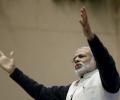
'Modi's brilliance seems to be in combining Indira Gandhi's 'feel' for the Indian pulse and Narasimha Rao's cynicism.' 'By the time the Opposition leaders caught up with Modi over the 'surgical strikes', he had already moved on,' says M K Bhadrakumar.

Swaraj said there is scope to do a lot more and this would be an important element of their deliberations.

'China refuses to talk to India on nuclear or ballistic missile issues and conclude any de-targeting agreement as Beijing did with Russia or a non-targeting agreement with the US.'
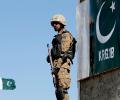
'If push comes to shove, Pakistan does have the capability to make it difficult for the US and NATO forces to make even a withdrawal of troops out of Afghanistan in orderly fashion,' says Ambassador M K Bhadrakumar.

'If India is already involved in helping the insurgents in Baluchistan and Karachi, as Pakistan says, it is but one step for New Delhi to bring Dawood or Hafiz Saeed into its sights,' says Amulya Ganguli.

In the matter pertaining to acquisition of AgustaWestland helicopters, the undisputed central issue that stands out is corruption, especially bribery, the statement said.
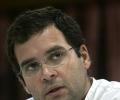
Describing journalist Ved Pratap Vaidik as a "Rashtriya Swayamsevak Sangh man", Rahul Gandhi on Tuesday questioned whether the Indian high commission in Islamabad had facilitated the meeting between him and Mumbai attacks mastermind Hafiz Saeed.
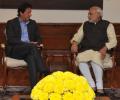
'Modi loves to keep others guessing and basks in the media glare, both traits that are politically helpful but are inimical to stable relations, especially in the fragile Indo-Pak equation.'

Even as the United States snuggles closer to India with the thinly veiled objective of containing China, the Indian strategy is to avoid alienating either nation.
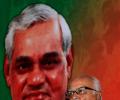
'Advani went by the book, by files, by advice given by his babus. He may be well read and articulate and a pleasant conversationalist, but none of that makes for the kind of creative politician that Vajpayee was.' 'This is the kind of observation about the Vajpayee premiership, more than the promise of espionage or Kashmir gossip, that made writing A S Dulat's book a satisfying experience,' says Aditya Sinha.

Terrorists on Monday night killed seven Amarnath pilgrims, including six women, and injured 19 others as they struck at a bus in Kashmir's Anantnag district, in the worst attack on the annual pilgrimage since the year 2001. Five of those killed were from Gujarat and two from Maharashtra. Here are the latest updates:

Colombo seems to be veering to the middle path between China and the US on global matters, but in regional matters of strategic security, it is increasingly identifying with India, points out N Sathiya Moorthy.
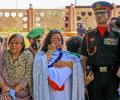
'The Delhi-Washington stalemate can end only if India's concern over trans-border terrorism is addressed.' 'The Indian security establishment expects a spike in terrorist attacks in the months ahead.' 'And there is every likelihood that India may retaliate against Pakistan at some point,' observes Ambassador M K Bhadrakumar.

Narendra Modi's engagement at the upcoming BRICS Summit in Brazil will be keenly watched as the prime minister will interact with some of the world's most powerful leaders. The summit to be held in Fortaleza will also see the launch of the significant BRICS bank whose idea was mooted by India. Rediff.com's Sheela Bhatt gives a lowdown on Modi's first major international rendezvous.
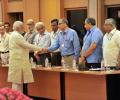
From Swachh Bharat to spearheading the Make in India campaign, the PMO seems to be at the centre of all policies, writes Nivedita Mookerji.
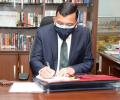
'He is not a person to challenge the government.' 'He is a man who is known to go with the flow' Aditi Phadnis reports.

Nevertheless, border dispute will feature prominently on Modi's agenda but the matter won't be discussed at length. Nayanima Basu reports

'Indian diplomacy faltered amidst multiple failures of statecraft.' 'The functionaries responsible must be held to account for their abject failure,' asserts Ambassador M K Bhadrakumar.

'We will continue to ask why Modi and his government were benefactors to this AgustaWestland company, why within 40 days they overturned the ban?'

'He was carrying his Indian passport. This seems like a very different sort of spy than the ones we see in movies, who carry fake passports and are highly trained,' says Aakar Patel.
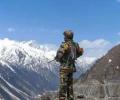
'China has forcibly occupied territory it had never occupied before, blocked Indian patrols' access to areas they had patrolled for decades and, most provocatively, killed 20 Indian soldiers.' 'Most countries would regard these as acts of war.' 'New Delhi has apparently taken off the table the option of evicting the PLA with force,' observes Ajai Shukla.

Modi also said the people of India felt proud that President Xi has twice received him out of the capital.
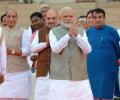
'The Modi Model we see now is still the old Gujarat Model.' 'But with an acknowledgement that governing India is more challenging than governing Gujarat,' notes Shekhar Gupta.
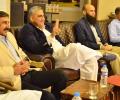
'Over the last year, Bajwa has created the environment to support bold moves on India. The ball is in India's court,' a senior Pakistan military officer tells Ajai Shukla.

Because of the treaty, no big dams or power projects can be built by India on Jhelum, Indus or Chenab.

India must present its demands of America confidently, instead of fearing that its pocket will somehow be picked, says Ajai Shukla.
The Indian Army and more recently the Indian Navy have already set up dedicated intelligence branches. It is surprising indeed that the IAF, where real time and timely intelligence is most vital for effective and safe prosecution of the air war, has still not done so itself, says Group Capt (retd) P I Muralidharan.
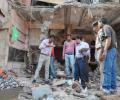
If terror indeed has no religion, no partisan affiliations, and if the government, media and all right-minded people in this country people truly believe that, let us not call one blast a "terrorist incident" and dismiss another one as a mere "cylinder blast" just because it is politically convenient, says Shehzad Poonawala.'If terror indeed has no religion, no partisan affiliations, and if the government, media and all right-minded people in this country truly believe that, let us not call one blast a "terrorist incident" and dismiss another one as a mere "cylinder blast" just because it is politically convenient,' argues Shehzad Poonawalla.

While the Rafale deal seems to be the main order of business during French President Francois Hollande's visit, other aspects could help sweeten the deal, says Claude Arpi.
'With Pakistan's 'first use doctrine' threatening the use of nuclear weapons early in a war with India, the S-400 will shield vulnerable targets like Delhi and Mumbai, complicating Pakistan's targeting calculations.'

'Engagement should never stop.' 'Reassure Kashmiris that they will be treated at par with the rest of India.' 'The peace you crave will be peace with honour.' 'Your special status will not be tinkered with.'
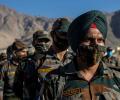
Did Xi deliver a message to Modi at Mamallapuram, which though couched in a velvet glove was time-bound? What was that message? It is clear Indian/Israeli/US spy satellites would not have missed detecting Chinese troop movements towards the Ladakh-Tibet frontier. Then why did some important functionaries in the Government of India choose to only ask the Russians about this in April 2020? Was Russian reassurance of Chinese troop movements being part of a routine exercise the reason that the Leh-based XIV Corps did not mobilise itself for its annual summer exercises near the LAC? A fascinating excerpt from Iqbal Chand Malhotra's new book Red Fear: The China Threat.

Amid souring ties, the president visited Beijing for three days. On his return to India, a hope of better ties has arisen, says senior correspondent R Rajagopalan, who travelled with Pranab Mukherjee to the Asian superpower.

'The lack of zeal to serve the country in the mammoth government machinery will be the biggest challenge for Narendra Modi and his government as he tries to change things; there will be not just resistance, but a lack of response to begin with.' If Narendra Modi becomes prime minister, Sheela Bhatt/Rediff.com says the issue of human resources, lack of talent and value system in governance will be his biggest challenge.
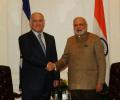
Modi's visit is aimed at commemorating 25 years of establishment of diplomatic ties between the two countries.
